Strengthening Aviation Rescue, Emergency Response, and Operational Readiness Across New South Wales
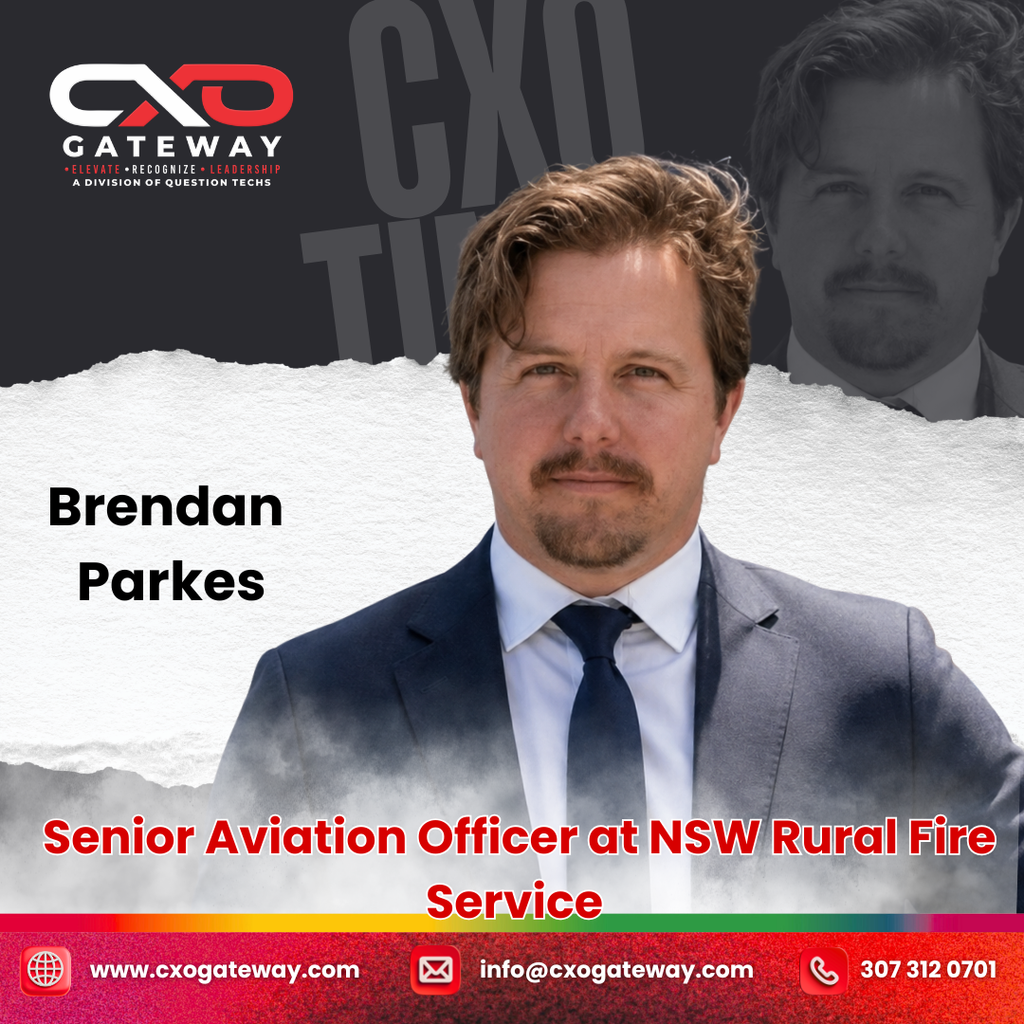
The NSW Rural Fire Service (NSW RFS) has appointed Brendan Parkes as Senior Aviation Officer, marking a significant new chapter in a career defined by aviation rescue, emergency response, technical rescue, military operations, team leadership, and operational readiness.
Based in Coffs Harbour, New South Wales, Parkes brings extensive experience across rotary-wing aviation operations, helicopter rescue, aerial firefighting, search and rescue, technical rescue, aviation crash response, and emergency management. His career has been built around operating in complex, high-risk environments where preparation, teamwork, communication, and decisive action are essential.
In his new role with the NSW RFS, Parkes leads rotary-wing aviation operations supporting helicopter rescue, aerial firefighting, and emergency response across NSW. His responsibilities include coordinating airborne rescue operations, supporting aviation readiness and capability development, delivering training to RFS personnel and volunteers, and working closely with aircrew, aircraft operators, and emergency services.
Leading Aviation Rescue and Emergency Response at NSW RFS
As Senior Aviation Officer at NSW Rural Fire Service, Parkes is responsible for supporting aviation capabilities that play a critical role in emergency response across the state.
Rotary-wing aviation can provide essential capabilities during bushfires, floods, rescue missions, and other emergency situations, particularly when terrain, distance, or infrastructure creates challenges for conventional response teams.
Parkes’ mandate encompasses the coordination and execution of airborne rescue operations while helping ensure personnel, aircraft, procedures, and equipment remain operationally ready.
His role also includes training and capability development, reinforcing the importance of continuous preparation in emergency services.
By working across aircrew, aircraft operators, emergency services, and RFS personnel, Parkes contributes to creating a coordinated operational environment where aviation assets can be deployed safely and effectively when communities need them most.
Expanding Specialist Fire and Rescue Expertise
Alongside his NSW RFS responsibilities, Parkes has served as a Specialist Fire & Rescue Technician with Industrial Fire & Rescue in Queensland.
In this role, he responds to complex fire, rescue, and emergency incidents while operating specialist firefighting and rescue equipment.
His responsibilities include conducting technical rescues in high-risk or remote environments and participating in training and drills to maintain operational capability.
This experience complements his aviation background by providing a broader understanding of emergency response, incident management, specialist equipment, and rescue operations on the ground.
Together, his aviation and technical rescue experience provides a comprehensive perspective on emergency operations–from airborne response and extraction to ground-based rescue and incident support.
A Distinguished Career with the Australian Army
A major part of Parkes’ professional journey has been his 15-plus-year career with the Australian Army, where he developed specialist expertise in aviation and technical rescue.
Since 2017, he has served as a Combat Rescue Operator and Team Leader, working across complex operational environments and exercises.
His responsibilities have included airborne insertion, winching, rappelling, aviation rescue, search and rescue, vertical rescue, tactical extraction, and team leadership.
The role has also involved supporting Defence Aid to the Civil Community (DACC) taskings during major bushfire and flood events.
These experiences provided Parkes with exposure to situations where military and civilian emergency response capabilities must work together under demanding conditions.
As a team leader, he has also developed and delivered advanced rescue training and led small teams as an Incident Controller, strengthening his capabilities in decision-making, coordination, personnel management, and operational leadership.
Building Aviation Expertise Through Mission Support
Parkes‘ Army Aviation journey began in Groundcrewman Mission Support, a position he held from 2011 to 2017.
The role provided a strong operational foundation in aviation environments, including administrative responsibilities, training support, flying operations, flight-following procedures, and aircraft communications.
Working within aviation operations required him to maintain effective radio communication with aircraft while making rapid decisions in stressful and fast-moving situations, including search-and-rescue scenarios.
He also supported the professional development of junior soldiers entering the trade, contributing to a culture of operational discipline, training, and continuous improvement.
This early experience established the aviation knowledge and operational awareness that would later support his progression into specialist rescue and team leadership.
Supporting Rapid Aviation Emergency Response
Earlier in 2025, Parkes served as an Emergency Response Rescue Crew Officer with Sentinel Aviation, supporting the organisation’s Crash Response Helicopter capability.
As part of a fly-away rescue team, he worked alongside rescue crew members and medical personnel responding to aircraft emergencies.
The role required deployment by hoist or landing to incident locations, where the team provided rapid rescue, site safety, casualty assistance, and emergency support.
His responsibilities included helping secure crash sites, mitigating fire and general hazards, supporting command and control, assisting with medical treatment, and contributing to casualty extrication.
Operating during both day and night missions and alongside military and contracted aircraft, Parkes was required to maintain high standards of aircraft-specific training, equipment readiness, and operational safety.
He also worked closely with pilots, Sentinel Aviation leadership, and local agencies during exercises, reinforcing the collaborative nature of modern aviation emergency response.
A Career Built Around Operational Readiness
A defining characteristic of Parkes‘ career is his focus on readiness.
In emergency response, success often depends on preparation undertaken long before an incident occurs. Aircraft must be ready, teams must be trained, equipment must be serviceable, procedures must be understood, and communication channels must be established.
Parkes’ career across the Australian Army, Sentinel Aviation, Industrial Fire & Rescue, and now the NSW Rural Fire Service has consistently involved these elements.
His experience demonstrates the importance of combining technical expertise with practical leadership and a strong safety culture.
Whether responding to bushfires, floods, aviation incidents, technical rescues, or other emergencies, his work has centred on ensuring teams are prepared to perform effectively under pressure.
Connecting Military Expertise With Civilian Emergency Response
Parkes‘ transition into the NSW Rural Fire Service represents an important continuation of his commitment to emergency response.
His military background provides experience in structured operations, specialist rescue, aviation environments, and high-pressure decision-making, while his civilian emergency response roles broaden that expertise across fire, rescue, aviation, and community-focused operations.
This combination allows him to bring a multidisciplinary perspective to aviation operations at the NSW RFS.
His experience with Defence Aid to the Civil Community is particularly relevant, having already worked in environments where military capabilities supported communities affected by major natural disasters.
At the NSW RFS, that experience can contribute to strengthening coordination between aviation teams, emergency responders, and other operational stakeholders.
Developing People and Capability
Beyond operational response, Parkes‘ career demonstrates a strong commitment to training and capability development.
Throughout his Australian Army career, he supported junior personnel and delivered advanced rescue training. His current responsibilities at the NSW RFS similarly include training RFS personnel and volunteers.
In emergency services, capability is ultimately built through people. Developing confident, technically capable teams ensures that organisations can respond effectively when conditions become unpredictable.
Parkes’ focus on training, operational readiness, equipment serviceability, and continuous development reflects this broader leadership philosophy.
Looking Ahead in Aviation Emergency Management
As Senior Aviation Officer at NSW Rural Fire Service, Brendan Parkes enters a role that brings together many of the capabilities he has developed throughout his career.
His experience across rotary-wing aviation, helicopter rescue, aerial firefighting support, technical rescue, aviation crash response, search and rescue, military operations, incident leadership, and emergency training provides a strong foundation for his responsibilities.
At a time when Australian communities continue to face complex emergency challenges, aviation remains an important component of the emergency response ecosystem.
Parkes’ role will contribute to ensuring that aviation capabilities are prepared, coordinated, and deployed effectively when required.
A Leadership Journey Defined by Service and Preparedness
Brendan Parkes’ professional journey illustrates how expertise developed across defence, aviation, firefighting, and specialist rescue can come together to create meaningful emergency response capability.
From his early work supporting Army Aviation operations to becoming a Combat Rescue Operator and Team Leader, and from emergency response aviation to specialist fire and rescue, each stage has expanded his ability to operate in challenging environments.
His appointment as Senior Aviation Officer at the NSW Rural Fire Service represents another important step in that journey.
It is a leadership role grounded not only in aviation expertise, but also in service, safety, preparedness, teamwork, training, and operational excellence.
As Parkes continues to support rotary-wing aviation operations across New South Wales, his work will contribute to a critical mission: helping ensure that emergency response teams have the capability, coordination, and readiness required to protect communities when it matters most.
CXO Gateway Perspective
CXO Gateway continues to spotlight professionals whose leadership, expertise, and commitment are shaping critical functions across industries and public services.
Brendan Parkes’ appointment as Senior Aviation Officer at the NSW Rural Fire Service highlights the vital role of specialist leadership in aviation rescue and emergency response.
His journey from Australian Army Aviation and combat rescue to civilian emergency response and NSW RFS aviation leadership reflects a career built on technical excellence, operational readiness, continuous learning, and service to the community.