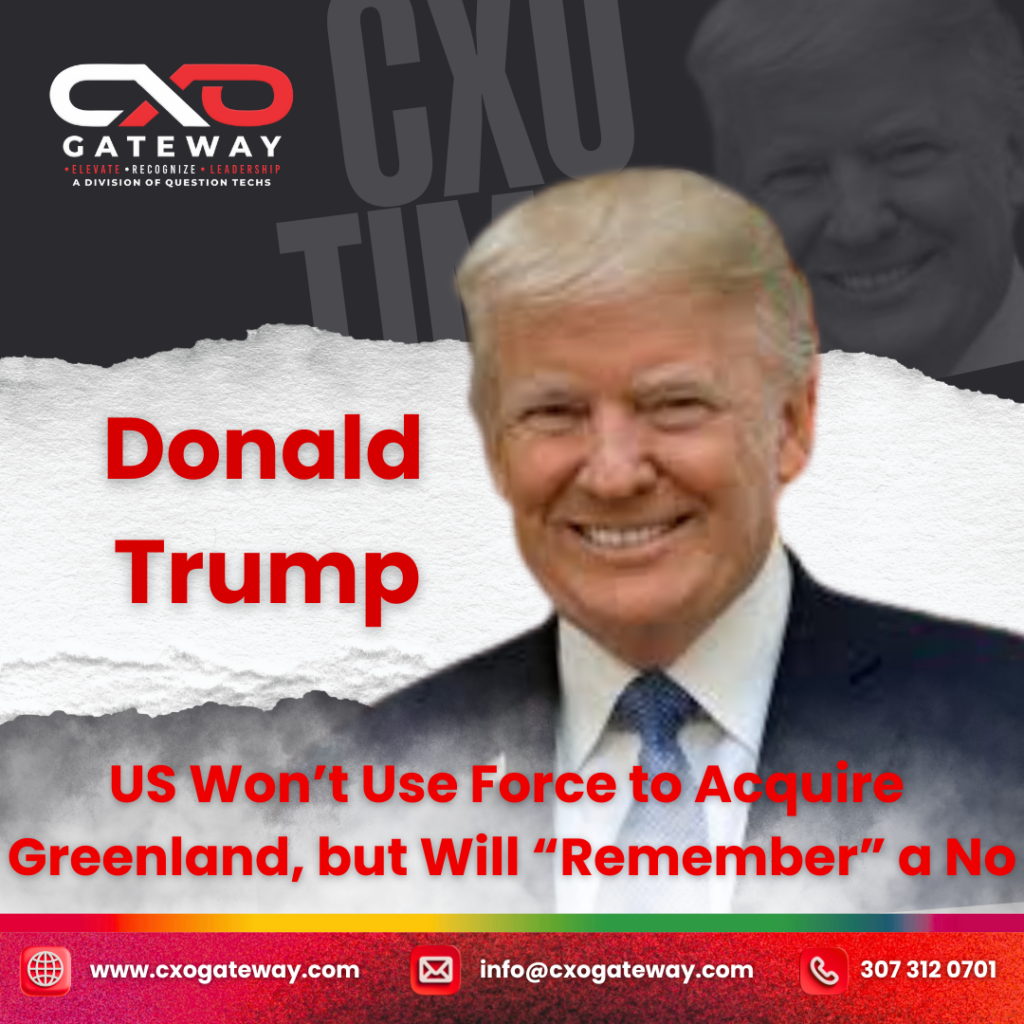
The future of Greenland has been the subject of renewed discussion, with former US President Donald Trump making remarks.. According to him, the US will not use force in acquiring Greenland but will remember it if they reject. This has led to renewed interest in American strategic ambitions in the Arctic and a shift towards balance of diplomacy and pressure in international relations.
While Trump‘s comments may seem straightforward, they shed light on more profound political issues. Why? Greenland‘s crucial location, especially in the face of climate change, and its affiliation with Denmark make it a significant player in today’S Arctic competitive landscape.
Greenland’s Importance in Today’s World
Located between North America and Europe, Greenland is the world’s largest island. The location of the Arctic is vital for both trade routes and global security, despite its small population.
With climate change causing Arctic ice to melt, global powers such as the US, Russia, and China are now interested in natural resources like new shipping lanes. Greenland is not just a defensive base for the US, it’s also essential for maintaining influence in the North Atlantic and Arctic regions.
Thule Space Base, now known as Pituffik Space B, serves as the US‘s primary military base and is responsible for missile warning systems and space surveillance. The communication of American interest in Greenland can have an impact on global attitudes.
Trump’s Comments and Their Context
Trump‘s statement about not using force while “remembering” a refusal is characterized by alternating comfort and subtlety. It recognizes sovereignty, but warns of potential political implications for Greenland or Denmark if they do not align with US interests.
Trump‘s foreign policy approach is characterized by a transactional approach, with an emphasis on leverage and strategic advantages rather than multilateral consensus. Advocates claim that this level of clarity facilitates negotiations, but critics caution against it, fearing that it may alienate allies and undermine diplomatic norms.
Greenland’s Political Status and Voice
With its own parliament, Greenland is responsible for most domestic issues and oversees Denmark‘s defense as well as foreign policy affairs. Discussions about Greenland‘s future involve the leaders of Copenhagen and other parties.
It has been a long-standing statement by the Greenlandic rulers that the island cannot be sold. Instead of being transferred from one sovereign nation to another, the public sentiment supports self-rule and independence.
Earlier, Greenlandic and Danish officials had rejected Trump‘s proposal to purchase Greenland. Although it caused a stir internationally, the event reinforced Greenland‘s aspiration to be perceived as politic rather than just bargaining chips.
Denmark–US Relations Under Review
Denmark and the US have a strong alliance within NATO, with shared military and diplomatic ties. The relationship has been impacted by the discussions about purchasing Greenland.
The latest comments from Trump are intended to be more restrained, excluding the use of force. Why does this matter? The notion that a refusal can be remembered prompts questions about how smaller allies are handled in global power dynamics.
The balance between Denmark‘s alliance with the US and its commitment to Greenland‘ s independence is fragile. Denmark‘s leaders prioritize cooperation over coercion, asserting that Greenland‘ governing process will be determined by its citizens.
Arctic a new frontier of geopolitics?
Greenland‘s renewed attention indicates a connection to the larger war on and offbeat issues in the Arctic. The Russian military has augmented its forces, and China has become a “near-Arctic state,” spending on research projects to enhance its infrastructure.
To ensure Western security, the US must make certain that Arctic territories are secure. Due to its close proximity to North America, Greenland is of particular importance for early warning systems and defense strategies….
The strategic issue at hand is Trump‘s remarks, as it could result in a rise in power among competing nations. A no may indicate long-term strategic changes instead of instant revenge.
Diplomatic Language vs. Strategic Signaling
Several layers of meaning exist within the vocabulary of international relations. Trump‘s declaration to avoid using force to communicate with nations but also includes strategic warnings.
We will remember Geopolitics is about economic, diplomatic, or strategic choices. Why? The outcome may be diminished collaboration or alterations in obligations.either way.
The linguistic approach strikes a balance between reality and pressure. Major powers consider the impact of decisions on relations, but frame it in public so it can increase tensions and provoke a defensive reaction.
Reactions and Global Perception
The global response to Trump‘s statement has been varied. A few consider it to sully past rhetoric while asserting American interests. It is regarded by some as unconventional diplomacy that could result in friction.
The episode highlights the importance of international norms that safeguard self-determination and sovereignty, as well as the possibility of power imbalances in global politics for smaller nations and autonomous territories. Additionally,
It also brings renewed interest to Greenland, its people and their aspirations, and the country’s increasing position on the global stage.
What This Means Moving Forward
US–Greenland relations are likely to prioritize practical cooperation over acquisition. What does this mean? Trust can be strengthened by investing in infrastructure, education, climate research, and economic development instead of encouraging provocative statements.
The main areas of focus for Greenland are sustainable development, environmental protection and increased independence…. Engaging in these areas of concern is highly valued by them.
To maintain its Arctic influence, the US must balance strategic interests with respect to allies and local populations. With the global spotlight on the region, a partnership-based approach to diplomacy will be necessary.
The Arctic’s Future: Power, Choice & Reality
Trump‘s statement about not using force while recollecting a refusal is indicative of the power-practical balance between principle and authority in contemporary geopolitics. The statement serves to provide reassurance but is also disconcerting, reflecting wider issues concerning the interactions between major powers and smaller nations.
As climate change transforms the Arctic and global rivalry grows, Greenland‘s importance will only grow larger. The way major powers engage in a respectful and authentic relationship will have an impact on regional stability and the credibility of the global community.
The fate of Greenland is ultimately in the hands of its inhabitants, and the world will closely observe to see if the global powers uphold that principle in their speech and actions. Why?