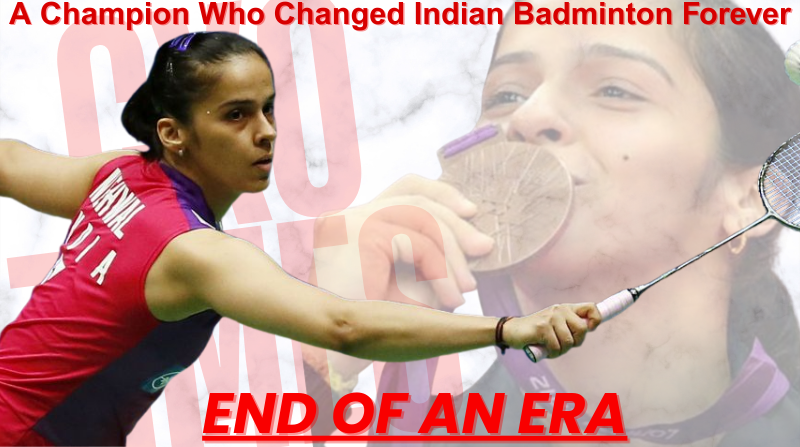
Saina Nehwal, Ex-World No. 1, Announces Retirement Owing to Knee Osteoarthritis
When Saina Nehwal announced her retirement from professional badminton, it marked the end of an era—not just for the sport, but for Indian athletics as a whole. Her decision closes a chapter that redefined what Indian badminton could be, who it could belong to, and how far it could go.
For fans, it may feel like a quiet goodbye. But for Indian sport, Saina Nehwal’s journey demands something far greater than farewell applause. It calls for reflection, recognition, and gratitude for a career that reshaped ambition for generations.
Saina didn’t just win matches. She changed mindsets.
The Beginning of a New Possibility
Before Saina Nehwal, badminton in India existed largely in pockets—respected, followed, but rarely believed in as a global podium sport. That changed when a young girl from Hisar, Haryana, picked up a racquet and refused to accept limitations.
Her rise wasn’t meteoric; it was methodical. Trained at the Pullela Gopichand Badminton Academy, Saina combined relentless discipline with an unshakeable competitive spirit. Early victories hinted at promise, but what set her apart was consistency—the rare ability to stay at the top, year after year, in one of the most physically and mentally demanding sports.
She didn’t arrive to decorate the sport. She arrived to redefine it.
Breaking Barriers, One Tournament at a Time
Saina Nehwal’s career is filled with firsts—milestones that didn’t just belong to her, but to the country she represented.
She became the first Indian woman to win an Olympic badminton medal, securing bronze at the 2012 London Olympic. She was the first Indian woman to reach the world No. 1 ranking, a feat that placed India firmly on badminton’s global map.
These achievements weren’t isolated moments of brilliance. They were sustained acts of excellence in a sport dominated by powerhouses from China, Indonesia, South Korea, and Denmark. Each win against a higher-ranked opponent wasn’t just a personal victory—it was a statement that India belonged at the very top.
And she did this in an era when resources, infrastructure, and support systems were still evolving.
Carrying the Weight of Expectation
With success came expectation—and Saina carried it with remarkable composure.
Every tournament she entered, she wasn’t just Saina Nehwal the athlete. She was the face of Indian badminton. Wins were celebrated nationally; losses were scrutinized endlessly. Few athletes understand that kind of pressure, and fewer still endure it for over a decade.
Yet, Saina never shied away from responsibility. She showed up. Injured, tired, doubted—she showed up. Her career was punctuated by comebacks that demanded more courage than her victories ever did.
In doing so, she taught a generation that greatness isn’t just about winning—it’s about resilience.
The Physical and Mental Toll of Excellence
Badminton is unforgiving. It demands explosive speed, constant agility, and immense stamina. Over the years, Saina’s body bore the cost of excellence—knee injuries, foot issues, surgeries, and rehabilitation periods that tested her resolve.
Her later years were not about dominance, but about defiance—defying pain, age, and the inevitable shift toward younger competitors. Many athletes choose to step away quietly when the body begins to resist. Saina stayed, fought, and competed on her terms.
Her retirement, therefore, is not a retreat. It is a decision made with dignity—acknowledging a body that has given everything to the sport.
Redefining What Indian Women Could Be in Sport
Perhaps Saina Nehwal’s greatest contribution lies beyond medals and rankings.
She arrived at a time when Indian women in sport were still navigating social expectations, limited visibility, and uneven support. Her success didn’t ask for permission. It demanded attention.
Young girls across the country saw in Saina a powerful message: excellence has no gender. You could be strong, ambitious, competitive—and unapologetically so.
Long before conversations about representation became mainstream, Saina was already embodying it. Her journey paved the way for athletes like P.V. Sindhu, who would go on to achieve historic success of her own. But that path had to be cleared first—and Saina did that work.
A Rivalry That Elevated the Sport
Indian badminton’s golden era cannot be told without acknowledging the Saina Nehwal–P.V. Sindhu dynamic. It wasn’t just a rivalry; it was a shared elevation of standards.
Together, they ensured that Indian women’s badminton remained globally relevant. Their matches drew attention, sparked debate, and brought fans closer to the sport. While comparisons were inevitable, what truly mattered was the depth they brought to Indian badminton.
Saina’s presence made excellence normal. Sindhu’s success made it scalable.
More Than an Athlete, A Cultural Shift
Saina Nehwal didn’t chase stardom, but it followed her anyway. Endorsements, media attention, and national honors came naturally. Yet she remained grounded in her identity as an athlete first.
She spoke openly about challenges—injuries, form slumps, and pressure—humanizing elite sport in a way few had before. Her honesty resonated, especially in a culture that often celebrates only victory.
In doing so, she helped shift how Indian audiences understand success. Not as perfection, but as persistence.
The Legacy She Leaves Behind
As Saina Nehwal steps away from competitive badminton, her legacy remains deeply embedded in Indian sport.
She leaves behind:
- A generation of players who believe they belong on the world stage
- A system that learned to support excellence because she demanded it
- A fan base that understands badminton as a high-stakes, high-skill global sport
Her achievements will be counted in medals and rankings, but her true impact will be measured in inspiration—quietly unfolding in academies, school courts, and local tournaments across the country.
Every young athlete who dares to dream beyond limitation carries a piece of her legacy forward.
Retirement Is Not the End of Influence
Retirement from sport does not mean retirement from impact.
Whether Saina chooses mentorship, administration, commentary, or advocacy, her voice will carry weight. Indian sport needs her experience—her understanding of what it takes to build champions, protect athletes, and sustain excellence.
Her journey offers lessons not just for badminton, but for how India nurtures talent across disciplines.
The court may no longer see her competing, but her influence will remain active for years to come.
More Than a Goodbye
So yes, Saina Nehwal has announced her retirement from badminton.
But Indian sport owes her more than a goodbye.
It owes her recognition for changing the narrative. Gratitude for carrying expectation with grace. Respect for redefining what was possible. And responsibility—to ensure that the paths she opened remain wide for those who follow.
Some athletes win matches. Others change history.
Saina Nehwal did both.