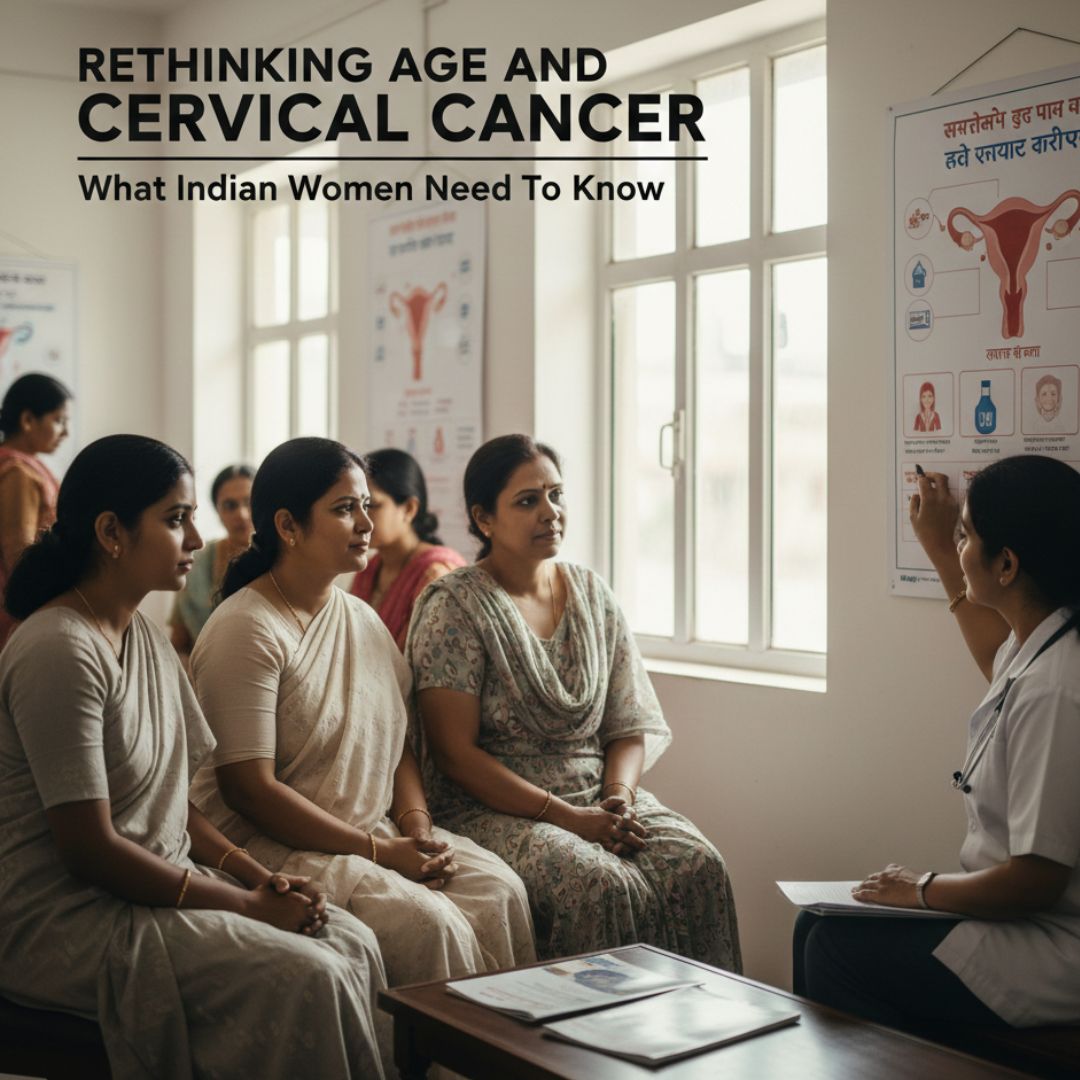
The perception of cervical cancer in India has been often inaccurate for a long time. Talking about it with a diagnosis is usually limited to whispers and not done openly. Many women believe that this issue only arises later in life, either after menopause or when serious symptoms become apparent.
But it is a dangerous way of thinking
Cancer of the cervix is not present at an early age in women. Why? It progresses slowly, sometimes silently, by possible events from years or even decades earlier. Age alone is not enough to delay prevention, ignore screenings and put lives at risk.
Indian women should reconsider their beliefs about age and cervical cancer. Why?
The Hidden Health Challenge in India: Cervical Cancer
The incidence of cervical cancer in India is among the highest globally. Many women are diagnosed at advanced stages, numbering in the thousands every year. Cervical cancer, which is one of the most preventable and treatable cancers when detected early, makes this particularly tragic.
However, the only exception to this is early detection.
Health care access, lack of awareness, social stigma surrounding reproductive health, and fear of medical procedures all play a role. The role of age myths is noteworthy. Women who believe they are too young or too old for screening often do not receive critical care.
How Cervical Cancer Develops
The development of cervical cancer is crucial to comprehend why age alone can’t be relied upon.
A long-term infection with high-risk Human Papillomavirus (HPV) is the most common cause of cases. The majority of people who engage in sexual activity will eventually experience it.
Most individuals experience a temporary improvement without any negative consequences. However, in some women, persistent HPV infection causes abnormal changes in cervical cells. The development of cancer can occur after 10 to 20 years.
This extended timeframe explains why cervical cancer is often detected later and why its early development goes unnoticed.
The Myth That Older Women Are at Higher Risk Is False
In India, it is commonly believed that cervical cancer solely affects women aged 40, 50, or above. Statistics indicate higher diagnosis rates among these age groups, but this may also reflect lower screening levels in younger women.
The reality is that HPV infection can occur during the late teenage years or early twenties, shortly after sexual activity begins. These changes may remain hidden for years.
The process may have started long before the cancer is detected, even though the woman may be older at diagnosis.
This misconception causes younger women to skip screening, believing they have time. Unfortunately, cervical cancer is not a result of age.
The Relationship Between Risk and Reality in Life
Prevention in Adolescence and Early Adulthood
Teenage girls and young women are often excluded from discussions about cervical cancer because it is uncommon at this age. Nonetheless, this stage is essential for prevention.
Ideally, HPV vaccination should be given before sexual activity to reduce high-risk virus strains. In India, poor awareness often discourages parents from choosing vaccination.
At this stage, the focus should be on preparedness, not fear.
The Missed Chances Among Women in Their 20s and Early 30s
The risk increases in this age group, but action is often delayed.
Many young Indian women balancing careers and families postpone health check-ups. Cervical screening is often considered unnecessary unless symptoms appear.
This is precisely when screening can detect early cell changes, preventing years of suffering later.
Midlife: When Diagnosis Is Most Common
Detection of cervical cancer in women aged 35 to 50 often occurs due to lack of prior screening.
When symptoms such as abnormal bleeding or pelvic pain appear, medical attention is finally sought. Although treatment can be effective, early detection remains critical.
Regular screenings during these years can make a significant difference.
After Menopause: Risk Doesn’t Disappear
A dangerous misconception is that cervical cancer is no longer a concern after menopause. Many older women stop visiting gynecologists, believing their reproductive health is no longer important.
Women who were never screened or screened irregularly remain at risk. Late diagnosis is common when symptoms are dismissed as age-related changes.
Vigilance must continue at every age
Why Indian Women Are Diagnosed Late
Delayed diagnosis occurs due to multiple overlapping factors:
- Lack of knowledge about cervical cancer and its slow progression
- Cultural discomfort around sexual health discussions
- Fear or shame regarding pelvic examinations
- Limited access to low-cost screening, especially in rural areas
- The belief that no symptoms mean no disease
When age myths are added, delays become almost inevitable.
Screening: A Life-Saving Tool
Cervical cancer screening is one of the most effective tools in modern medicine. It not only detects cancer but can also prevent it.
Screening identifies abnormal cervical cells before they become cancerous. These changes are usually easy to treat.
In India, methods include Pap smears, HPV testing, and visual inspection techniques. Regardless of the method, regular screening saves lives.
Waiting for symptoms or the “right age” undermines prevention.
HPV Vaccination and Age: Clearing the Confusion
HPV vaccination works best at an early age, but young adults can still benefit.
The vaccine does not encourage sexual activity—it prevents future cancer. As India expands vaccination efforts, dispelling age-related myths is essential.
Prevention is about protection, not morality.
Cervical Cancer Is Not Just a Women’s Issue
Cervical cancer is often framed as a women-only responsibility, leaving women to manage awareness and stigma alone.
Partners, families, healthcare providers, and policymakers all play vital roles. Supportive dialogue and accurate information can transform outcomes.
Using age to dismiss concerns unfairly shifts responsibility onto women
Listening to the Body—But Not Waiting for It to Scream
Early cervical cancer often has no symptoms, making reliance on physical signs risky.
By the time bleeding or pain appears, the disease may be advanced. This is why screening is essential.
Silence does not equal safety—at any age.
What Indian Women Can Do Starting Now
Regardless of age, women can take important steps:
- Learn about cervical cancer and HPV
- Consider vaccination for themselves or their children
- Begin screening at the recommended age and continue regularly
- Encourage open conversations with family and friends
- Seek medical advice without shame or delay
Health has no expiry date, and prevention has no minimum age.
Changing the Conversation About Age and Cervical Cancer
Rethinking age is not about fear—it is about informed action.
Cervical cancer is neither sudden nor inevitable. It is shaped by time, awareness, and access to care.
When Indian women understand that prevention starts early and continues for life, cervical cancer becomes preventable, not fatal.
The real question is not whether you are too young or too old—
it is whether you have the right information at the right time.