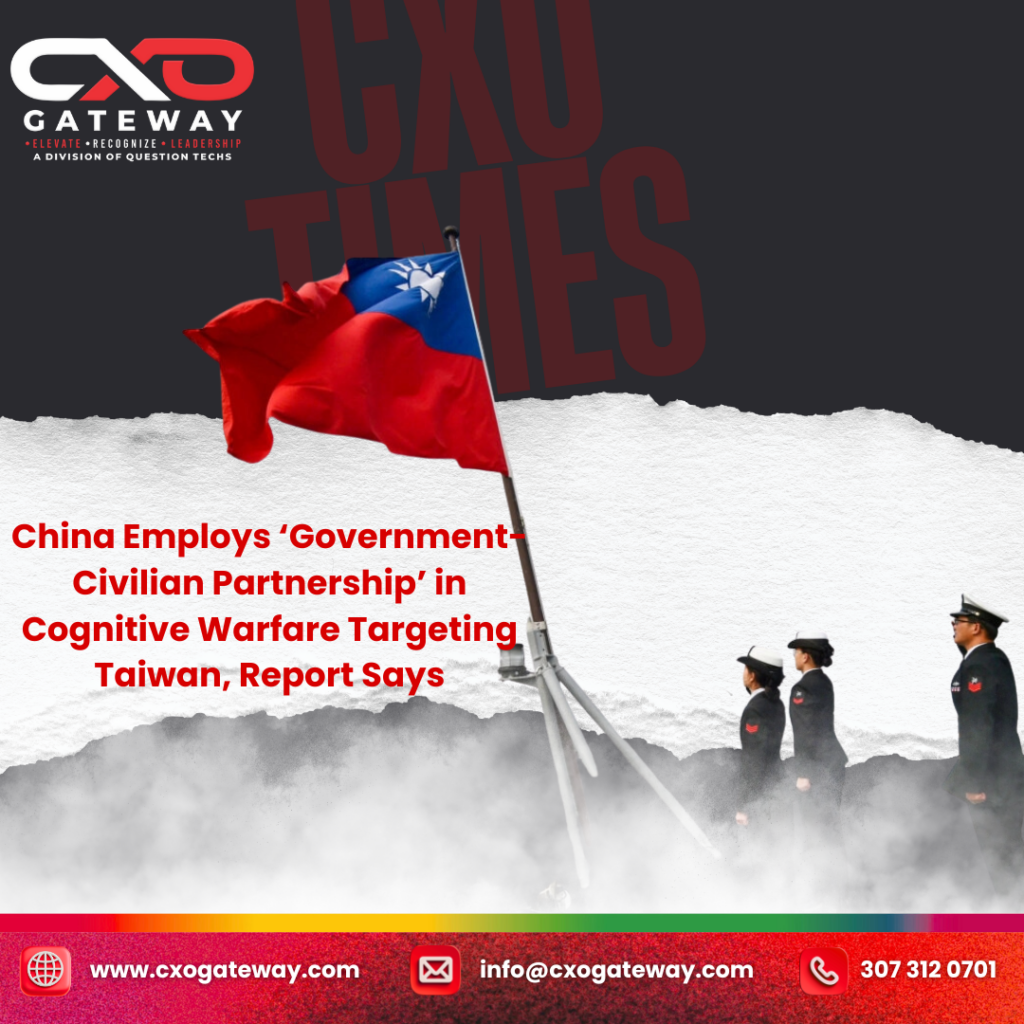
The online environment we experience today has a profound impact on our thinking. Why? The use of technology and information warfare in conflict extends beyond traditional battlefields. Additionally, there are new tactics being explored. The People’s Republic of China (PRC) has been using artificial intelligence (AI), partnering with private companies, and engaging in massive online influence campaigns to conduct cognitive warfare against Taiwan, as revealed by the National Security Bureau (NSB)‘s recent findings. This strategy seeks to influence public opinion, create division, and undermine Taiwan’s power and international recognition without any military intervention.
Understanding Cognitive Warfare
Cognitive warfare is about influencing people’s thinking and decision-making processes. It differs from conventional military conflicts in that it uses technology, social media, and propaganda to shape perceptions and beliefs. Cognitive warfare in Taiwan seeks to create confusion, undermine institutional trust, weaken resistance to external pressures, and reduce international support for Taiwan’s democratic model.
By combining state efforts with civilian tech resources, China’s approach is made more subtle and difficult to detect.
The Government-Civilian Partnership Approach
The NSB’s 2025 study highlights the use of a government-civilian partnership model in China’s cognitive operations. The information strategy of Beijing is reinforced through collaborations with private technology companies and independent online organizations, rather than relying solely on state actors.
Public-Private Integration
Power to influence campaigns in China is carried out by government agencies, including the Cyberspace Administration of China (CAC) and the Ministry of State Security. The collaboration with civil IT companies is also evident. Data is collected, tools are developed by these companies, and content is distributed through them.
Significant factors in this collaboration include:
• Data Collection and Analysis:
Personal data on Taiwanese political figures and influencers is gathered by Chinese IT companies to optimize campaigning.
• Content Creation and AI:
Businesses produce artificial intelligence systems to create fake videos, voices, and stories, such as deepfakes, that are designed to trick viewers.
• Bot Networks and Automation:
Automated programs are responsible for the rapid dissemination of disinformation through fake accounts on various platforms, commonly known as internet bots.
Chinese Cognitive Campaign Reveals Five Primary Strategies
According to the NSB report, China employs five fundamental strategies in its cognitive warfare against Taiwan:
- To produce effective propaganda, organizations gather in-depth data on specific individuals and groups.
- Unofficial news websites and social media accounts post fake stories to attract followers before incorporating political messages.
- A variety of people and bots flood platforms with pro-Beijing messages in different languages.
- AI is essential for crafting compelling content, with individualized messages that resonate with specific audiences.
- Online accounts of people around the world are hijacked by China during major events to spread false news.
Strategic Goals Behind These Operations
The NSB report highlights four primary objectives that drive China’s cognitive efforts towards Taiwan:
- Operations seek to divide Taiwanese society by dissipating content that promotes division. Why?
- Taiwan’s leadership and defense capabilities are undermined by these campaigns.
- The focus is not limited to Taiwan, as actions are being taken to shape the perceptions of allied nations and potentially diminish their support.
- Long-term, the objective is to normalize narratives that reflect China’s perspective on Taiwan.
Escalation and Sophistication
These operations have become more complex and extensive in recent times. Over 45,000 false accounts and more than 2.3 million pieces of disinformation were reported by Taiwan’s intelligence agencies in 2025, which is a significant increase due to the use of advanced technologies.
Broader-Based Implications for Taiwan and Beyond
The cognitive warfare in China is not limited to Taiwan but affects democracies globally. Why? With the rise of AI and deepfakes, there is a greater chance of manipulation by authoritarian regimes. Why? Similar tactics have been cautioned by experts worldwide, warning that democracies should remain vigilant.
The circumstances in Taiwan demonstrate that contemporary conflicts arise on various fronts, including cyber, cognitive, and kinetic, necessitating novel defense strategies rather than conventional military tactics.
Taiwan’s Response and Defense Strategies
The government, civil society, and international community are actively engaged in addressing these threats with Taiwan. This entails upgrading reporting mechanisms, cooperating with fact-checkers to validate reports, and encouraging social media platforms to swiftly eliminate falsehoods.
Additionally, Taiwan is enhancing security discussions and information sharing with democratic partners to counteract misinformation.
Achieving the New Battlefield of Perceptions: The Solution
In this digital age, peace and war seem increasingly indistinguishable. The cognitive warfare against Taiwan represents a shift toward strategies that prioritize perceptions over territory.
The advancement of AI technologies necessitates that democracies strengthen their information environment’s resilience, increase public awareness, and create defenses to safeguard the cognitive space where decisions are made.