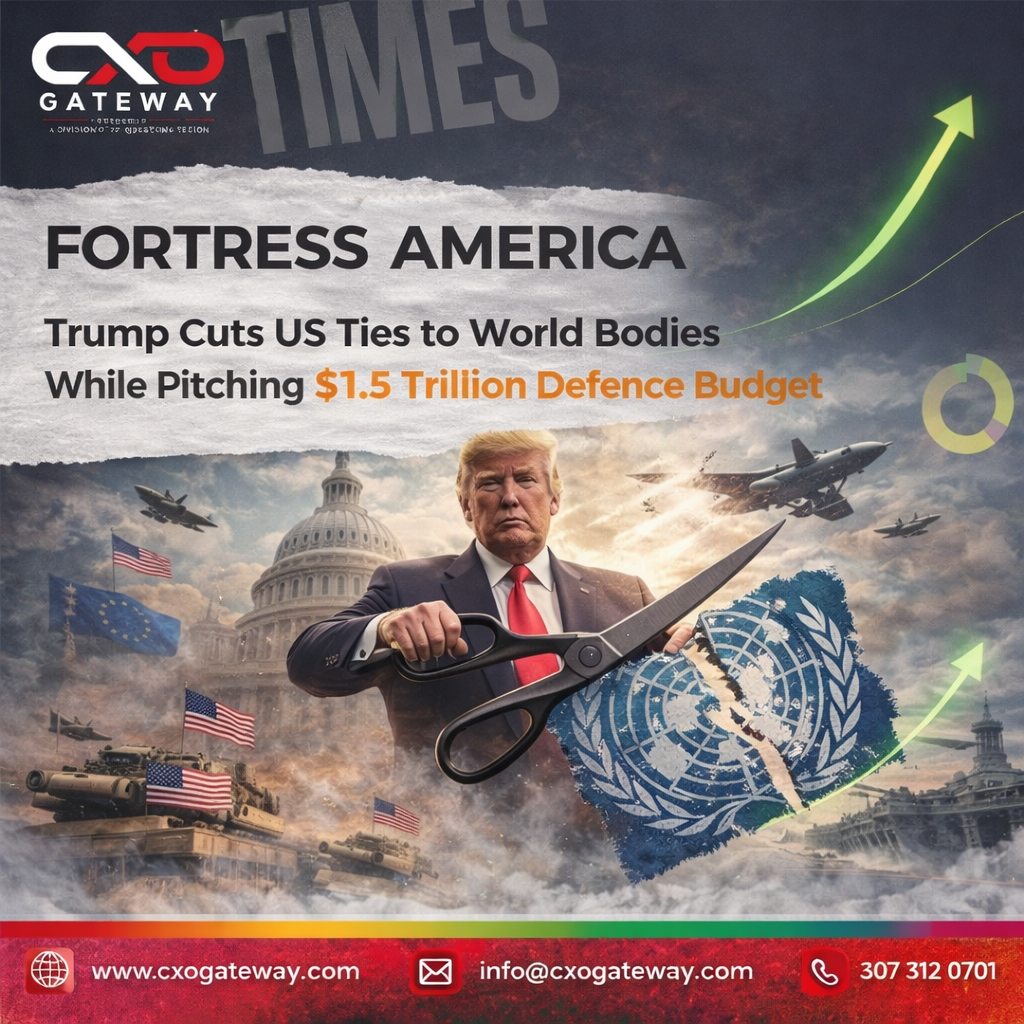
It looks like the U.S. is pulling back a bit, at least in spirit. With President Donald Trump back in the spotlight, Washington is making moves toward what folks are calling “Fortress America.” This approach seems to put military strength, national pride, and solo decision-making ahead of working together with other countries.
There are two big things happening that everyone’s talking about. First up, the Trump administration is dialing back on its involvement with international groups, questioning how useful they really are and what they cost taxpayers. Second, there’s a jaw-dropping proposal for a $1.5 trillion defense budget, which really drives home the idea that military power is key to keeping the country safe, rather than seeking global agreement.
These changes could really shake up America’s role on the world stage — we might see new alliances, shifts in global governance, and a different balance of power.
Bringing Back “America First” — But with a Twist
Trump’s doubts about global organizations aren’t new. During his first term, he made it clear he wasn’t a fan of places like the United Nations, NATO, and the World Health Organization, claiming they often take more than they give back to the U.S.
Now, that skepticism has turned into actual policy.
The administration has pulled back from, cut funding to, or reduced its involvement in several international groups, arguing that they limit U.S. sovereignty and complicate decision-making. Trump has labeled these organizations as “unelected bureaucracies” that slow down America’s ability to act in its own best interest.
Supporters believe this puts power back in Washington’s hands. Critics, however, warn that it might isolate the U.S. at a time when teamwork on a global scale is super important.
Why Trump Is Pulling Away from Global Bodies
From the administration’s viewpoint, pulling back isn’t about shutting the U.S. off from the world — it’s about gaining leverage.
Officials claim that many international organizations have become inefficient and politically charged, often working against U.S. interests. Climate talks and human rights councils are frequently mentioned as areas where rivals like China and Russia have too much say.
There’s also a money angle. The U.S. is one of the biggest financial backers of many global institutions, and Trump has questioned why American taxpayers should bear such costs when the results often clash with U.S. goals.
By stepping back, the administration believes it can:
– Cut down on financial obligations
– Avoid binding international agreements
– Act independently on trade, security, and diplomacy
But this retreat raises some big questions about who will step in to fill the gap — and whether the U.S. influence will actually grow or shrink in the long run.
The $1.5 Trillion Defense Budget: Power as Policy
Where one side of Trump’s view can be seen from retreating from global organizations, the $1.5 trillion defense budget guesses the other.
That huge number emphasizes the view that a strong military is the best way to deter threats in a world that is unpredictable. Besides, China, Russia, and Iran are considered the main threats. Besides, this budget is seen as a necessity by the administration in the face of rising threats from countries like China, Russia, and Iran, and the growing militarization of space and cyberspace.
Key priorities include:
Strengthening naval and air power in the Indo, Pacific Upgrading nuclear forces Developing advanced missile defense systems Investing in AI and autonomous weapons Enhancing cyber defense and space war capabilities What does it mean? The US is determined to remain the world’s leading military power even if it is turning apart from global talks.
Allies Caught Between Dependence and Doubt
Among the changes that the U.S. is making, its traditional allies are thus observing them with a mixture of worry and calculative consideration.
While it is true that a larger US defense budget might promote deterrence against common threats, it is also true that a decrease in the US involvement in multilateral institutions might lead to fears of unpredictability and a weakened ability of the group to make decisions.
European allies are especially worried that if the US pulls out, it could damage NATO’s political unity even if the military spending increases. At the same time, Asian partners worry about a more unilateral US approach and its resulting regional instability especially in areas like the South China Sea and the Taiwan Strait.
It is quite a predicament for many allies: to continue to depend on America’s military capability, at the same time, adapting to a more transactional and less consultative relationship.
China, Russia, and the Opportunity Gap
By stepping back from the international institutions, Washington is letting its rivals see this as an opportunity to make advances.
China has always been very active in expanding its reach in the world organs and presenting itself as a defender of multilateralism at the same time carrying out its own agenda. Russia has also profited from the uncoordinated West as its weakened state especially in areas of sanctions, arms control, and conflict resolution.
Experts warn that US disengagement might facilitate the rise of new sets of standards and power structures, especially in those parts of the world where power is frequently negotiated through international institutions rather than through the use of military force.
Domestic Debate: Security vs. Spending
At home, the proposal for a defense budget has ignited a quite intense debate.
Supporters of the defense budget increase contend that this move is essential to discourage potential foes, safeguard supply chains, and ensure global stability. They consider expenditure on defense as an unavoidable insurance against the world’s unpredictability. Detractors, on the other hand, maintain that a $1.5 trillion defense budget entails a substantial sacrifice in other areas. They raise doubts about the feasibility of such an amount in the light of domestic problems like healthcare, infrastructure, and education. Besides, a number of lawmakers stress that diplomatic means cannot be substituted by military power and that withdrawing from international institutions is a step that leads to the weakening of the US global leadership.
Is Fortress America Sustainable?
The main issue concerning Trump’s policy is beyond whether “Fortress America” can exist in a world that is highly interconnected. Having the most powerful military only serves as a deterrent, still, worldwide problems such as climate change, pandemics, financial instability, and tech governance are beyond borders. Not being an active member of global institutions means that the US would have no choice but to follow the rules made by others rather than being a ruler. At the same time, Trump’s policy finds support among those voters who think that the globalization process has lessened the power and accountability of the US. In their view, limiting overseas engagements and having increased security at home are obvious choices.
An exit from international organizations coupled with a defense budget of $1.5 trillion represent a dramatic shift in US strategy under Donald Trump. It reflects a conviction that sovereignty, power, and being independent are far more significant than agreement and working together.
Some argue that such a strategy may ensure Americas survival; others, that it will strip the country of its standing. However, it is obvious that Fortress America is no longer just a slogan but a political philosophy that affects the whole world.