When Hiring the Wrong People Becomes a Founder’s Heaviest Burden — Lessons from Sidhant Raj
The modern startup ecosystem celebrates hustle, scale, disruption, and speed. Yet beneath the glamour lies an uncomfortable truth that few founders say out loud-sometimes the biggest failure in a startup is not the idea… but the people hired to execute it.
In an exclusive conversation with CXO Gateway Times, Mr. Sidhant Raj – PMP® CSP® CCWP, Founder & CEO of Question Techs Group of Companies & Lifelink Healthtech LLC – shared one of the most honest, confrontational truths about entrepreneurship:
“The biggest mistake founders make is hiring people and then telling them what to do.”
It sounds counterintuitive. Isn’t the role of a founder to instruct, guide, and manage?
Sidhant disagrees. For him, micromanagement is not a leadership style-it is a symptom.
A symptom that the hiring process failed.
This article unpacks the deep philosophy behind his statement-a philosophy shaped by firsthand experience, sleepless nights, painful realizations, and the relentless pressure that every founder knows too well but rarely speaks about.
1. The Biggest Mistake Startups Make: Hiring People and Then Telling Them What to Do
According to Sidhant, the downfall of many startups begins quietly, subtly, and almost innocently: with a hiring decision. A founder brings someone onboard, excited to delegate, scale, and grow. But within weeks, the founder realizes that every small task needs explanation, every deadline needs follow-up, and every decision needs approval.
The founder becomes trapped in a cycle–
Not a leader, but a supervisor.
Not an innovator, but a babysitter.
This, Sidhant says, is how startups die from the inside.
Not with a loud bang, but with slow suffocation.
What founders mistake as team-building is actually team-burdening.
And burdened founders do not scale companies–they drown in them.
2. Why This Is a Critical Mistake: “You Didn’t Hire Talent, You Hired Extra Workload.”
Sidhant explains this with piercing clarity:
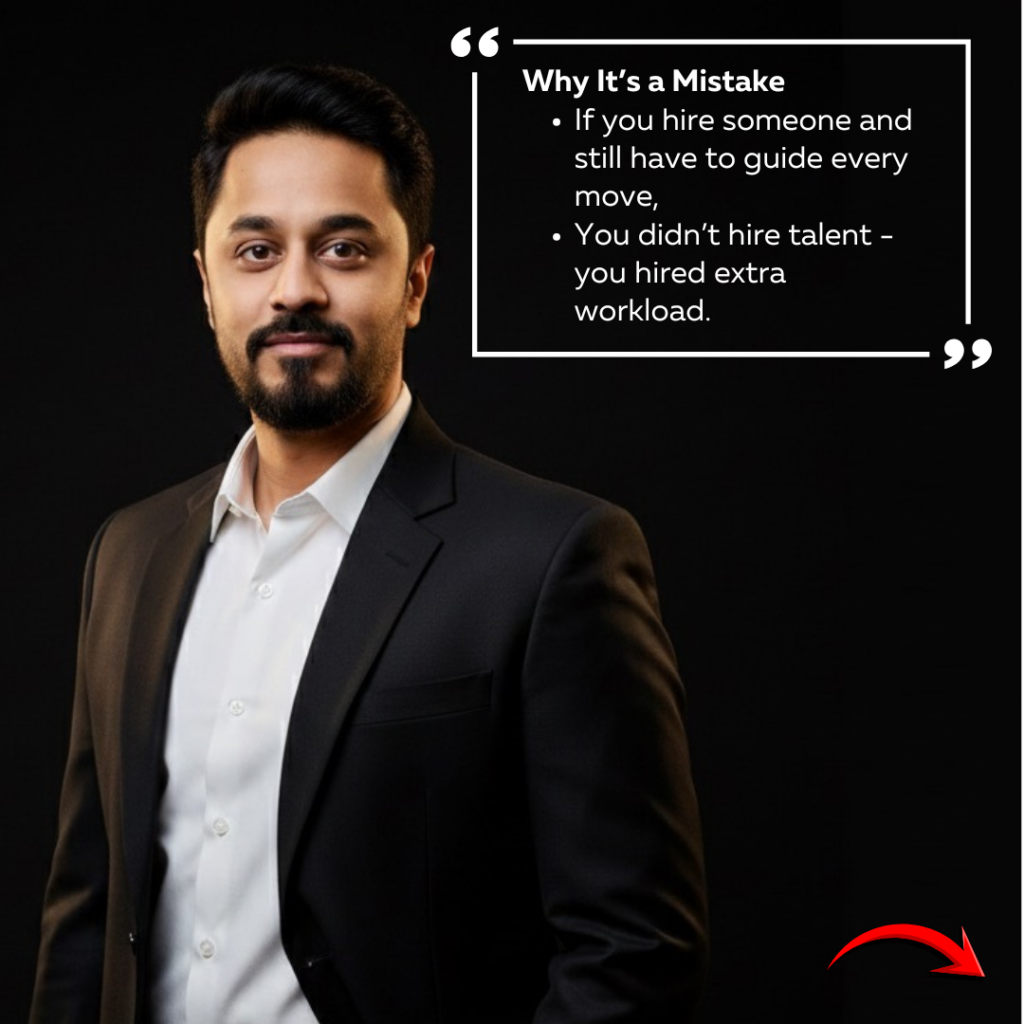
“If you must constantly supervise someone, you did not hire talent.
You hired an extra workload.”
In a startup, every hire is either a multiplier or a divider.
There is no neutral space.
A wrong hire costs:
- Time
- Focus
- Emotional bandwidth
- Momentum
- And often… the company itself
The painful irony is that many founders believe they are building a team, when in reality, they are building a second job for themselves.
Instead of gaining support, they inherit problems.
Instead of freeing their time, they lose more of it.
Instead of multiplying outcomes, they multiply stress.
This is the emotional pain Sidhant talks about–the silent suffering that founders endure when the people they trust become liabilities instead of assets.
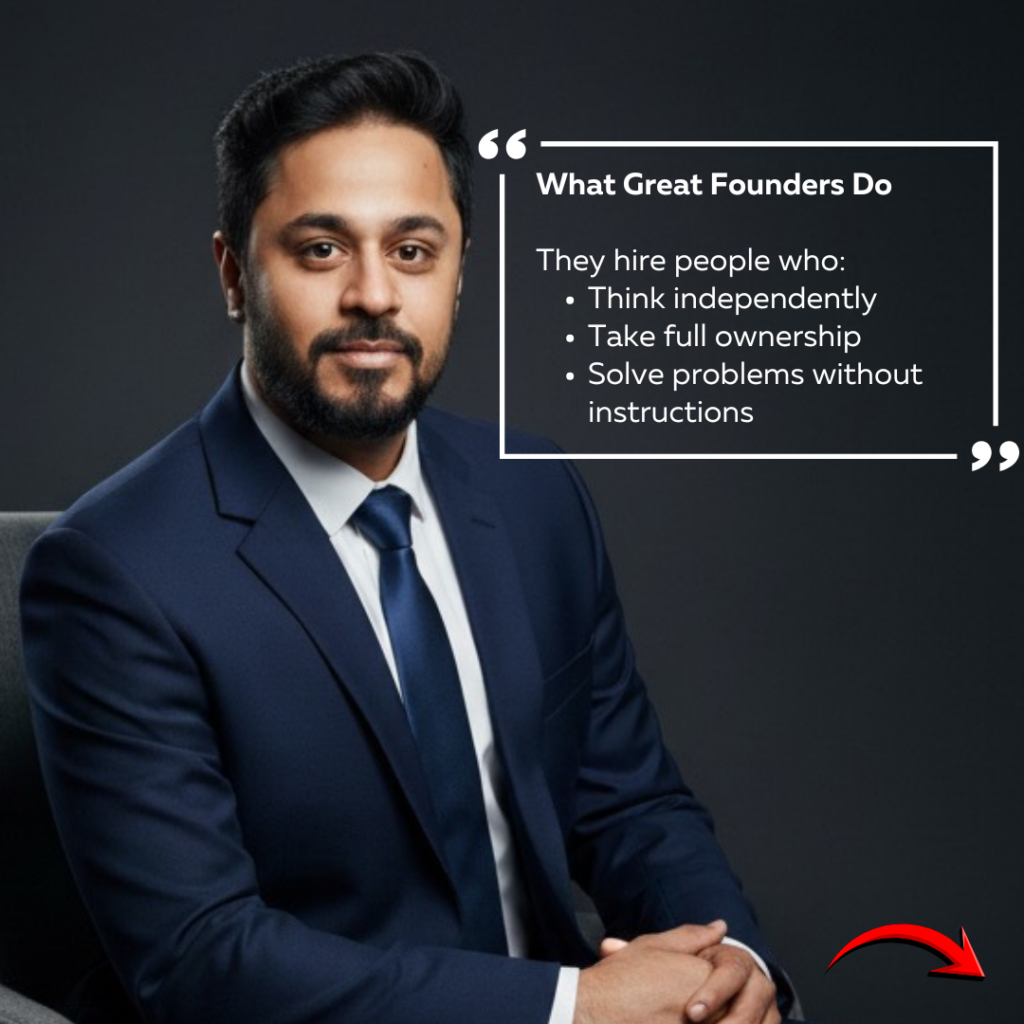
3. What Great Founders Do Differently: Hire Thinkers, Not Waiters
So what separates thriving companies from those stuck in survival mode?
Sidhant points to one differentiator:
Great founders hire people who think independently, take ownership, and solve problems without waiting for instructions.
These individuals:
- Identify challenges before they escalate
- Offer solutions without being asked
- Take responsibility for outcomes
- Drive the company forward instead of slowing it down
In short, they remove work from the founder’s plate, instead of adding to it.
The strongest companies are not built on the founder’s shoulders–they are built on the collective strength of self-driven teammates who operate with autonomy and accountability.
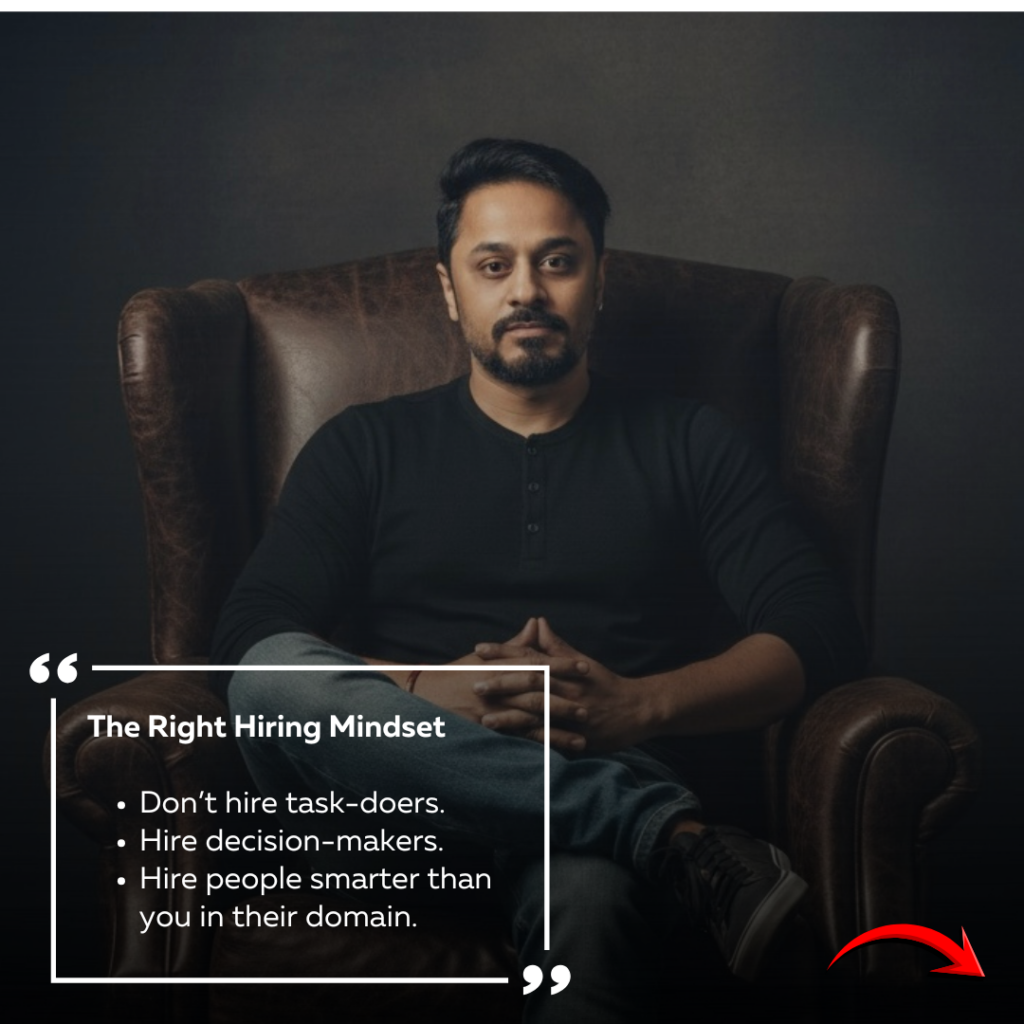
4. The Right Hiring Mindset: Decision-Makers, Not Task-Doers
Sidhant emphasizes that hiring is not just a process–it is a mindset.
And this mindset must evolve as the company grows.
“Don’t hire task-doers.
Hire decision-makers.
Hire people smarter than you in their domain.”
This requires humility.
It requires trust.
And it requires a founder to let go of ego.
A founder’s job is not to be the smartest person in the room.
A founder’s job is to build a room full of people smarter than them–
and then trust them to make decisions that move the company forward.
When founders shift their hiring philosophy from obedience to intelligence, from instruction-following to ownership-taking, their companies unlock unprecedented momentum.
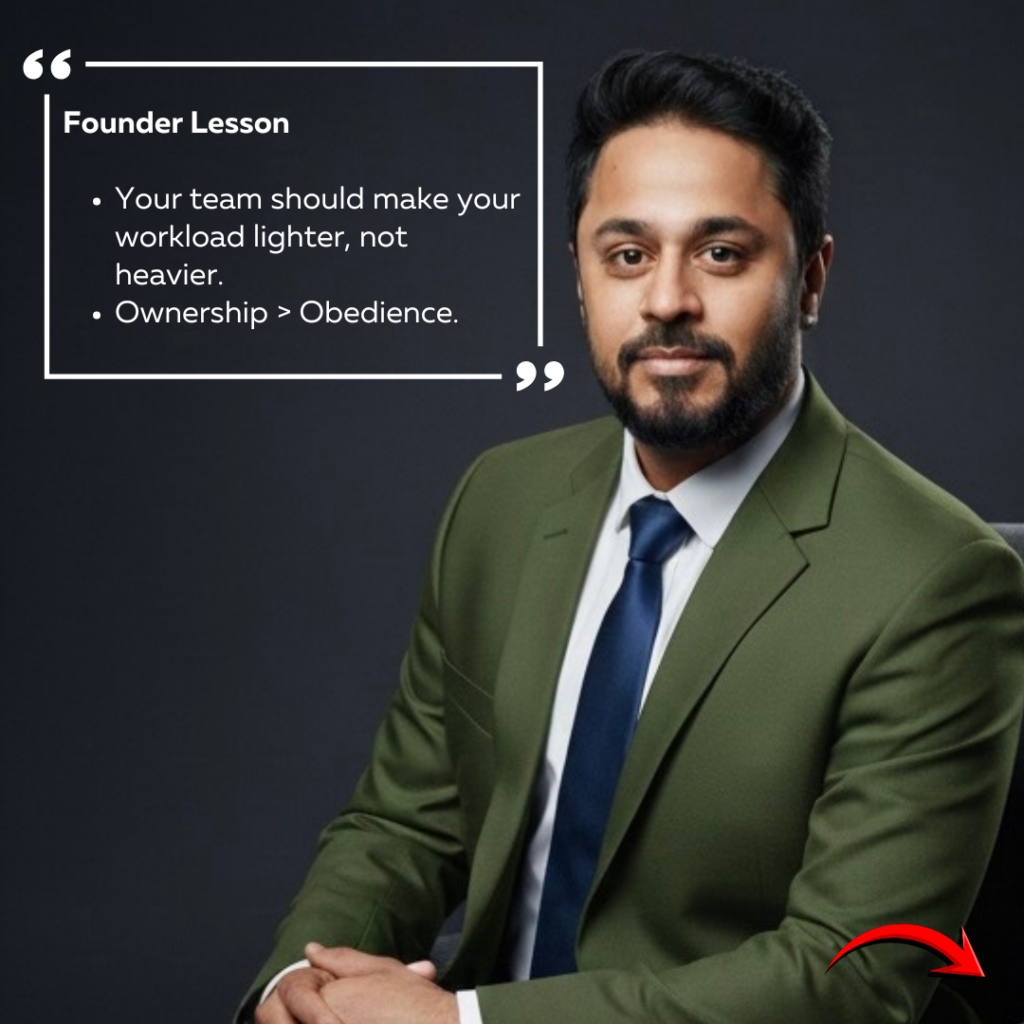
5. Founders’ Reality: Your Team Should Lighten Your Load, Not Increase It
In one of the most profound statements of the interview, Sidhant shared:
“Your team should make your workload lighter, not heavier.
Ownership must outweigh obedience.”
This is the cornerstone of sustainable leadership.
A founder cannot scale chaos.
A founder cannot scale dependency.
A founder can only scale ownership.
Startups succeed when the founder stops being the company’s engine and becomes the company’s architect.
And that happens only when the team is strong enough to carry operational weight–freeing the founder to think, build, innovate, and lead.

Conclusion: The Silent Truth of Startup Leadership
This conversation with Sidhant Raj left us with a powerful realization:
Startups don’t fail because founders aren’t working hard.
They fail because founders are working too hard on the wrong things.
Sidhant’s message is a wake-up call.
A reminder to founders everywhere:
- Hire better, not more.
- Empower more, control less.
- Trust talent, not instructions.
Because at the end of the day–
A founder’s vision can only scale when the people carrying that vision are capable of growing it independently.
And sometimes, the future of a company is not shaped by the brilliance of a founder…
but by the brilliance of the people the founder chooses to trust.